At least two prior county grand juries deemed Vernon Jones' security detail excessive and this will make it at least number three. I guess "protecting" the CEO with a large entourage of officers is more important than picking up known criminals off the streets of DeKalb?
http://www.championnewspaper.com/grand_jury_report.html
DeKalb County Officers – Officers Serving Outstanding Warrants: We strongly recommend that virtually all of the county’s law enforcement officers, currently assigned as part of the large entourage which rides with and allegedly “protects” the DeKalb County Chief Executive Officer as published in reports, on a daily basis, be immediately reassigned away from the County CEO and instead be added to the ten Sheriff’s officers which presently are trying to carry out the daunting task of serving the county’s 20,000 outstanding arrest warrants. As much as the County CEO may feel he needs the “protection” of these officers, we deem that the citizens of DeKalb County need their “protection” far more.
We urge that such resources be reallocated and that immediate action be taken to reallocate manpower to serve these outstanding warrants. Defendants should be speedily brought in for arraignment, the wheels of justice could proceed, and the streets of our communities would become safer. DeKalb County would be a better place for our families and children to live.
Thursday, June 5, 2008

Grand Jury doesn't believe Vernon Jones "internal investigation" of improper spending discoveries.
The DeKalb County Grand Jury report just released is must reading for all citizens of DeKalb.
http://www.championnewspaper.com/grand_jury_report.html
1. Investigation of DeKalb County “no bid” and “piecemeal” Purchasing Practices: We strongly recommend that the May-June (or subsequent) Grand Jury, pursuant to O.C.G.A. § 15-12-71 (b)(2) and (b)(4), conduct an investigation of both the “piecemeal” and “no bid” purchasing practices of DeKalb County Executive Assistant Richard Stogner and those individuals under his direction. We recommend that the Accounting Firm of KPMG be retained to assist the Grand Jury in this investigation. KPMG is the public accounting firm who, at the request of the DeKalb County Commissioners, originally discovered these practices. We publicly commend those DeKalb County Commissioners who approved this audit for their stewardship and attention to the proper use of taxpayer funds.
The aforementioned audit by KPMG documented widespread violations of DeKalb County’s purchasing rules. Companies that were paid millions of dollars either lacked contracts or received more than their contracts stipulated. DeKalb County executive assistant Richard Stogner approved purchase orders and contracts without bids.
As an example, per published reports, EMA Inc., a computer services company, was given 11 orders of $49,000 apiece on one day. That amount was just below the $50,000 threshold for a competitive selection process. In total, almost $3.7 million was paid to this entity. Another company, ISPA Inc., received six purchase orders for over $268,000, all on one day. No contract existed. These orders were approved by county Executive Assistant Richard Stogner.
We are not convinced by the “no ill intent” findings of the recently-completed “investigation” by a “consulting firm” headed by former Gwinnett County Commission Chairman Wayne Hill. We commend the current DeKalb County CEO for at least attempting to have someone outside his Department look at the problem, but disagree that an investigation by “consultants,” led by a fellow County Commission colleague, provides adequate independence. Instead, as recommended above, we urge that the same Accounting Firm who uncovered the original irregularities—KPMG, be retained. As trained, Certified Public Accountants, and with the background and discoveries of their first audit, KPMG should specifically be asked to look for potential wrongdoing, something they were not hired to do during their initial Forensic audit.
It should be noted that in accordance with a holding of the Georgia Supreme Court, we are not charging a public officer with misconduct in office. Rather, this general presentment recommends that a future Grand Jury, pursuant to the authority granted it under the above statutes, conduct an investigation. If that grand jury finds any misconduct, they can either return an indictment or a special presentment charging a county official.
We deem the management, stewardship and judicious use of taxpayer funds by DeKalb County’s elected and appointed officials as amongst the highest entrustment of responsibilities such officials have. With so many needs in the County for both resources and personnel which such funds provide, and having heard cases during our Grand Jury tenure involving the misuse of finances, we consider the proper handling of taxpayer funds by those to whom they are entrusted to be of supreme importance.
http://www.championnewspaper.com/grand_jury_report.html
Video from 3 months ago
1. Investigation of DeKalb County “no bid” and “piecemeal” Purchasing Practices: We strongly recommend that the May-June (or subsequent) Grand Jury, pursuant to O.C.G.A. § 15-12-71 (b)(2) and (b)(4), conduct an investigation of both the “piecemeal” and “no bid” purchasing practices of DeKalb County Executive Assistant Richard Stogner and those individuals under his direction. We recommend that the Accounting Firm of KPMG be retained to assist the Grand Jury in this investigation. KPMG is the public accounting firm who, at the request of the DeKalb County Commissioners, originally discovered these practices. We publicly commend those DeKalb County Commissioners who approved this audit for their stewardship and attention to the proper use of taxpayer funds.
The aforementioned audit by KPMG documented widespread violations of DeKalb County’s purchasing rules. Companies that were paid millions of dollars either lacked contracts or received more than their contracts stipulated. DeKalb County executive assistant Richard Stogner approved purchase orders and contracts without bids.
As an example, per published reports, EMA Inc., a computer services company, was given 11 orders of $49,000 apiece on one day. That amount was just below the $50,000 threshold for a competitive selection process. In total, almost $3.7 million was paid to this entity. Another company, ISPA Inc., received six purchase orders for over $268,000, all on one day. No contract existed. These orders were approved by county Executive Assistant Richard Stogner.
We are not convinced by the “no ill intent” findings of the recently-completed “investigation” by a “consulting firm” headed by former Gwinnett County Commission Chairman Wayne Hill. We commend the current DeKalb County CEO for at least attempting to have someone outside his Department look at the problem, but disagree that an investigation by “consultants,” led by a fellow County Commission colleague, provides adequate independence. Instead, as recommended above, we urge that the same Accounting Firm who uncovered the original irregularities—KPMG, be retained. As trained, Certified Public Accountants, and with the background and discoveries of their first audit, KPMG should specifically be asked to look for potential wrongdoing, something they were not hired to do during their initial Forensic audit.
It should be noted that in accordance with a holding of the Georgia Supreme Court, we are not charging a public officer with misconduct in office. Rather, this general presentment recommends that a future Grand Jury, pursuant to the authority granted it under the above statutes, conduct an investigation. If that grand jury finds any misconduct, they can either return an indictment or a special presentment charging a county official.
We deem the management, stewardship and judicious use of taxpayer funds by DeKalb County’s elected and appointed officials as amongst the highest entrustment of responsibilities such officials have. With so many needs in the County for both resources and personnel which such funds provide, and having heard cases during our Grand Jury tenure involving the misuse of finances, we consider the proper handling of taxpayer funds by those to whom they are entrusted to be of supreme importance.
DeKalb Grand Jury demands Police compensation and equipment improvements
The DeKalb County Grand Jury report just released is must reading for all citizens of DeKalb. As I have many friends on the DeKalb County Police Department, I will discuss the part of the report which highlights the problematic working conditions & the high turnover rate of the DeKalb County Police Department. Hopefully for the well being of the officers on the force and the stability of the County as a whole, these issues will finally be addressed after months of inaction by the County.
http://www.championnewspaper.com/grand_jury_report.html
http://www.championnewspaper.com/grand_jury_report.html
Video from 3 months ago
INQUIRY REGARDING WORKING CONDITIONS AND THE HIGH TURNOVER RATE IN THE DEKALB COUNTY POLICE DEPARTMENT
We had several interactions with officers regarding the high turnover rate in the DeKalb County Police Department (DKPD) pursuant to O.C.G.A. § 15-12-71 (b). This inquiry took place over several weeks during our Grand Jury term. We interviewed a number of DeKalb County police officers with work experience ranging from three to over 20 years. We conducted the interviews on a one-on-one basis under the promise of anonymity and without Police supervisors, county politicians, or other potential interference. What we heard were, we believe to be, candid and forthright statements regarding past, present, and hoped-for working conditions within the DKPD and great insight into the generally low morale and high turnover rate occurring therein.
We discovered the following: Many problems generally start at the top of an organization. Most officers are frustrated by the seemingly endless political clashes, both between the DKPD and our CEO/Commissioners as well as some political infighting within the DKPD itself. DeKalb County has had four police chiefs in the last five years. Such upheaval has not been conducive to departmental operational plans, continuity, and other stabilizing influences which are important for the proper functioning of a Police Department. While several officers do not agree with all of Chief Terrell Bolton’s ideas, he is perceived by many of the rank and file as at least bringing a Plan to the department and trying to implement it. Several officers felt that Chief Bolton needs support from County Elected officials and urge that politics be set aside for the good of the county.
A vast majority of officers support Chief Bolton’s plea for equipping them with Taser devices. The death of a Gwinnett County man from Taser devices a few years ago seemed to “scare” DeKalb officials and the devices were immediately removed form the DKPD for fear of lawsuits. Such a “knee-jerk” reaction by DeKalb County officials now appears both short-sighted and relatively foolish given the recently concluded Special Grand jury investigation into the 2006 shootings of suspects by the DKPD and the resulting uproar. Had the officers been equipped with Taser devices during that time and, more importantly, had the officers been empowered with the choice of such effective, yet almost always non-lethal devices, perhaps the 2006 results would have been different. The 2008 slayings of DKPD Officers Bryant and Barker may also have had a different result had these policemen been equipped with Taser devices.
In many ways, Taser devices also seem preferable to police batons/clubs with regard to the immediate and long-term injuries that suspects may incur. As a Grand Jury, our observations from touring the Jail, from private interviews conducted with DKPD officers and from hearing ≈ 450 cases of Grand Jury testimony is that these men and women, who bravely serve the citizens of DeKalb County, are put in harm’s way virtually each and every day they go to work. They should be equipped with the latest and best technology that will protect them, protect suspects, and protect the law-abiding citizens of DeKalb County. Along this vein, several officers noted that, at a minimum, all law enforcement vehicles used in any traffic stop should be equipped with dashboard cameras to provide video evidence for both the protection of the officers and of the suspects/defendants.
Of paramount concern amongst those we interviewed was the extremely high turnover rate within the DKPD. According to one veteran detective, 43 officers have left the DKPD since the beginning of 2008 including 19 in one month. Only a small number of those losses were due to retirement. While pay is always an issue, DKPD starting pay is actually commensurate with other metro Atlanta counties. It is the salaries amongst veterans on the police force and the lack of adequate raises which lead them to become discouraged and to look elsewhere. In some instances, relatively new police officers are making the same or more than veterans who have been on the force many more years. While we do not advocate the “union theory” that seniority should be the only criteria with regard to pay raises, we do think it is important that experience, along with other evaluative measures including merit, performance and competence should also be part of a fair and progressive pay scale.
Our interviews revealed a critical problem with a shortage of manpower. Such a condition consequently leads to many other morale-deflating problems including canceled vacations, forced overtime, and increased stress. Add these factors to DeKalb County’s already-high crime rate and the dire situation quickly becomes calamitous. In addition, officers reported a shortage of squad cars with waits up to two hours for the previous shift to return cars so that the next shift could go on patrol. As in other areas, DeKalb’s training is generally first-rate but its facilities are perceived as lacking. Eventually among veteran officers, and with the extremely high crime rate in DeKalb County, surrounding county police departments often “cannibalize” DeKalb’s highly trained police force with the promise of less stress, less crime, and the same (or better) pay.
The veterans pay and lack of manpower issues result in a “vicious cycle” wherein the lack of manpower leads to an extremely heavy burden on existing officers who suffer canceled vacations, low morale, and then leave the department in search of more favorable working conditions. This creates an even larger manpower shortage, with remaining veterans not being adequately compensated as the department must offer relatively higher salaries to new officers to entice them to join the DKPD and replace those who left.
One other important item we discovered from our interviews dealt was the misplaced emphasis the Department has on writing traffic tickets rather than patrolling for criminal activity. Many rookies in the DKPD are perceived as “gung-ho” in their quest to write citations. There is an active competition amongst these younger officers to rack up ticket-writing “stats” to prove they are “doing their job.” Veteran policemen felt that using more discretion when writing tickets and instead, occasionally issuing warnings would build more goodwill within the communities of DeKalb County and lead to more joint Police/Citizen cooperation efforts in focusing on criminal activity. Veteran officers also suggested that DeKalb County would be much better served by generally having one policeman handle traffic in an area while the remaining officers focus on patrolling neighborhoods and businesses to spot potential crimes. Experienced officers noted that simply having a police presence patrolling an area and keeping a lookout for “bad citizens” (as such officers are trained to do), would likely act as a preventative measure for many crimes in the first place.
We call upon the DeKalb County elected and appointed officials and other officers to address the compensation and equipment problems immediately. Some funding proposals such as those presented by Commissioner Ellis would enable the pay increase to take place without first rushing to the all-to-frequent politician’s “remedy” of raising taxes on the citizens of DeKalb County. We also have offered other remedies as stated previously and have made specific recommendations with regard to the DeKalb County Police Department in the “Recommendations to Elected and Appointed County Officials” section of these General Presentments.
Wednesday, June 4, 2008
Informal City of Dunwoody Presentation, Sunday 7 PM @ DNDC
City of Dunwoody Presentation
Dunwoody North Driving Club
Sunday June 8th
7:00 PM
Dunwoody North Driving Club
Sunday June 8th
7:00 PM
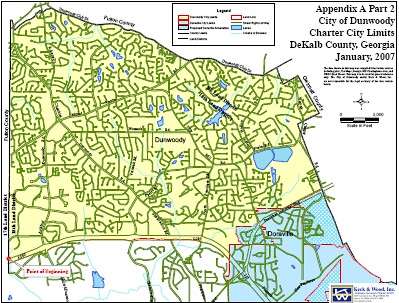 The Citizens for Dunwoody, a non-profit organization working on creating the City of Dunwoody has gathered the available facts and attempted to identify all of the issues about becoming an incorporated City within DeKalb County. Creating a new city to provide local municipal services is a big step and shouldn’t be taken lightly, therefore the residents need to be well informed prior to voting on July 15th to decide the issue.
Since I sit on the Board for the Citizens for Dunwoody, I have scheduled a short informational meeting for the residents of Dunwoody North to discuss the topic in a small informal gathering this Sunday, June 8th at 7 p.m. at the Dunwoody North Driving Clubhouse. Please come out to learn more about the issue.
Developers push through rezoning applications with DeKalb County prior to the City of Dunwoody being created.
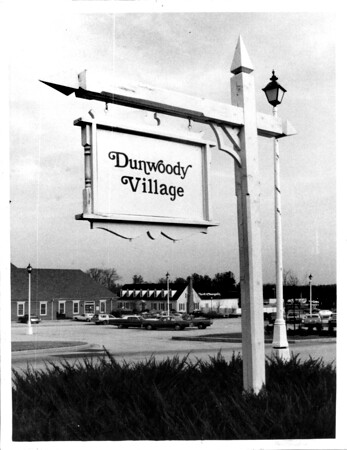 Every first Sunday evening of the month, I attend the Dunwoody Homeowners Association meeting in order to be informed on community events and to find out what redevelopment is being proposed by developers. Every month it is basically the same issue, apartments, apartments and more apartments. Developers come before the DHA board and want more density, more stories, and lower construction costs in order to make the biggest buck. The DHA does what they can to work with the developer and the community to get to a workable agreement but in the end the DHA has little real power.
There is such a current glut of apartments that have been approved in Dunwoody yet still not built that it will take years to fill the proposed capacity, unfortunately that doesn’t stop the developers from filing their rezoning applications anyway. These Dunwoody developers are currently rushing to file applications into the DeKalb County pipeline before Dunwoody can become a city, since they believe (and are probably right) that the County will be less restrictive then the proposed new city.
If it were up to board members and those in attendance at the Dunwoody Homeownwers’ Association meeting, the incorporation of Dunwoody couldn’t come soon enough. You see another developer has filed a rezoning application which would put 200 apartments on Old Spring House Lane, behind the Georgetown Kroger. This is the only street that feeds into subdivision and the residents of the community are very upset that this large proposed housing project will negatively affect their community.
As the credit crunch deepens, mortgage defaults climb and the housing market turmoil shows no signs of letting up, rental apartment building owners are smiling because of the higher demand for their rental products. Georgetown, Chamblee Dunwoody Road and the abandoned Emory Shallowford Hospital properties on North Shallowford Road are all prime areas for redevelopment yet without a master plan individual parcels will attempt to do whatever they feel is right for their investors, without looking at what is best for the community as a whole.
What is the answer? After seeing first hand on the way DeKalb County operates, I believe a more responsive city government will handle these kinds of local zoning issues far better than DeKalb County. With a city of Dunwoody we could actually have a workable plan for our community. It will be a guide for our future - drawn up by our neighbors. Most of all, it will reflect the aspirations of Dunwoody citizens. Our city council members will know the details of all projects, how they fit into the community and all zoning hearings will be held locally so that there is community involvement.
I see that as a large improvement over the current circumstances and like the members of the community who attended the Dunwoody Homeowners Association meeting on Sunday, it couldn’t happen soon enough for me.
Tuesday, June 3, 2008
Update on open records request, Does Brook Run have buried asbestos? When will the 30 acres of park land be available?
 30 Acres of Closed Park Space
 I have a habit of requesting public records and posting them on line and I apologize for hyping the Brook Run Park asbestos cleanup without completing the story.
As a reminder, Brook Run is a 102 acre park in Dunwoody where DeKalb County contracted to have five abandoned buildings removed at a cost of 1.3 million dollars. Towards the end of the project, additional asbestos was “discovered” and the cost of the project jumped by an additional $500,000 dollars. I have made several open record requests regarding this property and it is my belief that this project has been mismanaged and financial games have been played. The county’s response to my open records requests have varied between extremely unresponsive (they flat out lied to me once stating that there were no records available and then were caught in the bold faced lie with the $500,000 extension happening the next week) to bending over backward to assist me. This time the response was very good.
Mr. Dave Butler, the Environmental Manager for the DeKalb Parks Department whom I have known and talked to in the past, cooperated fully by providing everything I asked for in order to assist me in verifying that the County has done the proper due diligence as it relates to cleaning up the Brook Run property. Mr. Butler provided the hundreds of waste manifests proving the movement of the concrete to the landfill, internal e-mails, maps /drawings and the check list which states that the Brook Run project is now complete.
In an e-mail to me regarding the possible burying of asbestos, Mr. Butler gave me his personal account of the asbestos removal.
During removal of the Therapy Building foundation and subsequent grading of the site, I made twice weekly inspections of the work, the environmental inspector from Planning and Development made weekly inspections, and the Georgia Environmental Protection Division (EPD) visited the site several times. There was no evidence of demolition debris buried on site. The remaining fragments of stone, brick, or concrete that you may see on the surface were left behind after loading out the stockpiles of debris.The link below contains a good portion of the records (except for the waste manifests) and the final project checklist which shows that everything has been completed in the park.
With that being said, I believe the back of Brook Run Park is still closed. Why?? The work is done and there are 30 acres of beautiful park land waiting to be explored, why is it still closed?
If anybody finds out, please let me know, I have been asking that same question for months.
Oh, and if you happen to talk to the DeKalb County Parks Department, please ask them when the benches for the Children’s playground are scheduled to arrive? I have been asking that question for years.
Subscribe to:
Posts (Atom)

